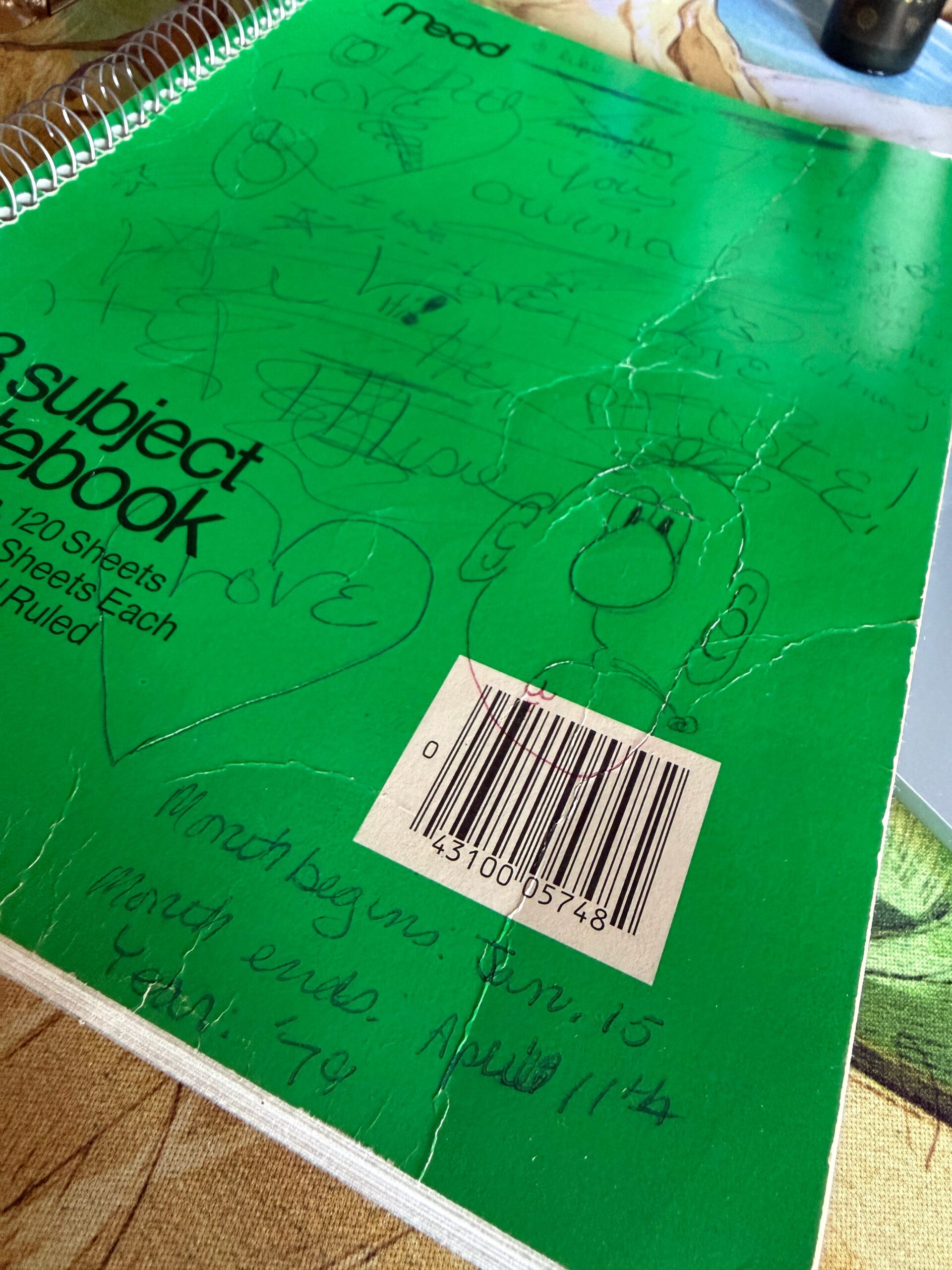
While going through storage tubs some years ago, I came across one full of notebooks from my angsty teen years. I cringed as I read entry after entry filled with a longing to be liked by the male persuasion. I was reintroduced to every page’s corner, where a boy’s name announced itself in looping 1980s cursive—the boy I liked that day. Often it was the same name for days or weeks in a row, but there were sections where the names flitted and interchanged on and off each page like rabid butterflies. I burned these notebooks in the fireplace, embarrassed at the idea of anyone ever coming across them, and sad at my own damaged desperation to be liked and accepted.
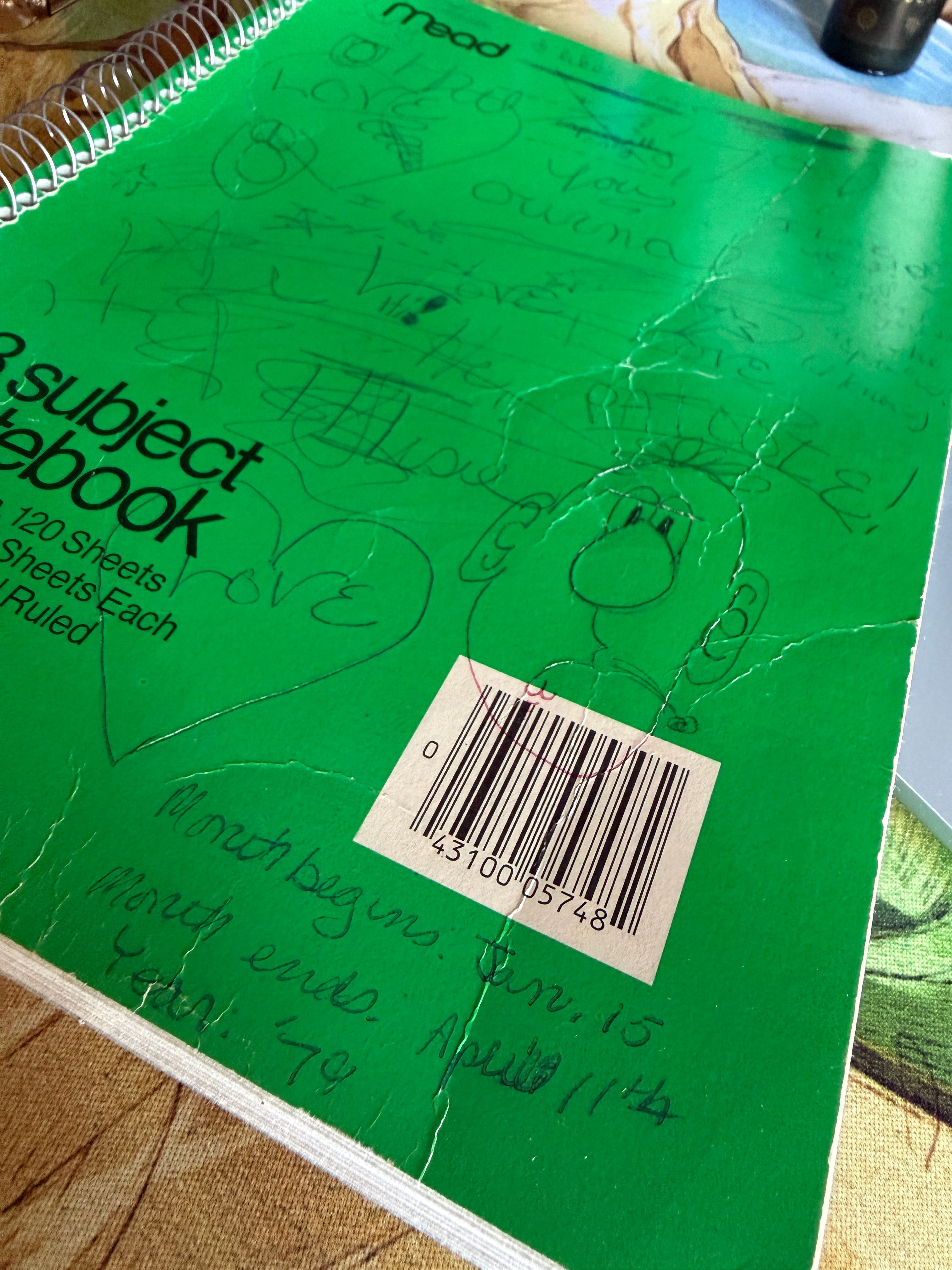
Along with stickers, doodles, and S.W.A.K.s, these notebooks were also filled with rehashing the embarrassment that was gym class, the pop quiz I was certain I had failed, and how grody John Doe winked at me at the arcade (I’m so SURE!). Interesting information, to be so SURE, but the ramblings of a mere diary.
Diaries and Journals
In my mind, diaries are different from journals. They may not have had hard covers and locks, but those lovelorn junior high notebooks were glorified diaries. If I were the person I am now, instead of writing another damn name in the corner, I would have forced myself to fill a page (or ten) as I attempted an inner investigation into why I was so boy-crazy, why I needed the opposite sex to validate me, and why I had no confidence. As teenagers, most of us didn’t have the wisdom that comes with age to go spelunking for this important information, but we do now. That’s where journaling comes in.
In a recent conversation with a friend, I was surprised to hear they had never thought of journaling in a way that didn’t involve rehashing the day’s activities or making lists of daily to-dos.
And, Here Comes the Tarot!
The challenge with true journaling is that we often feel like we don’t have anything to ‘say.’ You may feel as though your day went quite swimmingly, miraculously without any panic attacks, haunting regrets, or glowering rage. (I know, that last one is kind of a constant these days…but we can only write about that so much…) That’s when the tarot comes in.
You know I love to talk about what an incredible creative writing tool tarot cards can be. They are also perfect for conjuring up our personal stories.
As with fiction writing, you don’t have to know what the cards actually mean to get inspired by the images.
Below is a unique take on the Eight of Cups from my newly acquired Infinity Tarot deck.
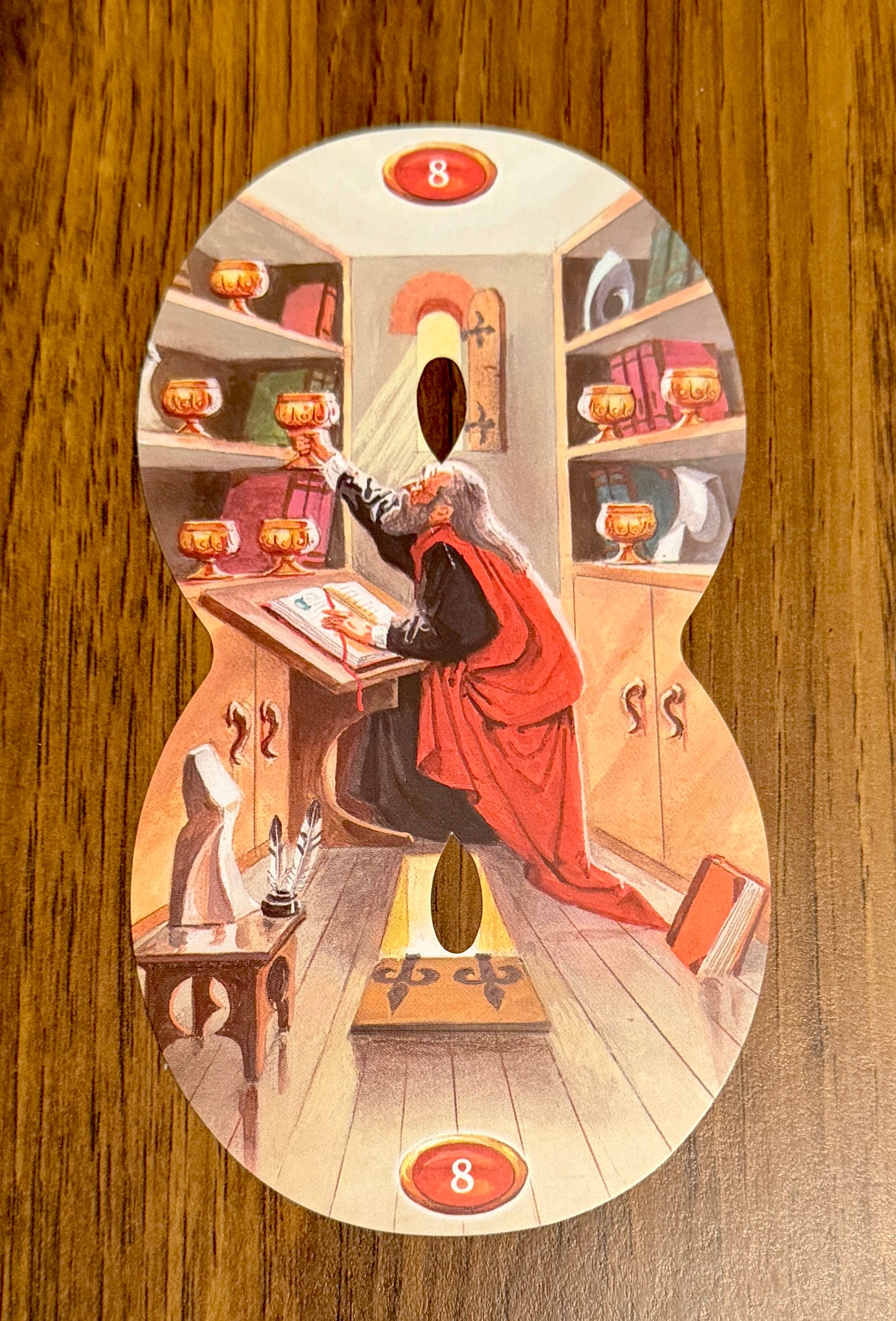
Take a moment to look at the image. What did you notice first? How does the card make you feel? Is it happy, positive, negative, sad, hopeful, humorous, strange? Notice all of the objects in the picture, and what they may ‘mean’ to you. How do you experience the character’s mood? Pause now and jot down any ideas or first impressions. Simply list what you see or write an entire entry before you read on…
Now that you’ve come up with some of your own discoveries, here are some examples I came up with:
-
The man is elderly. How do I view aging?
-
He is reaching for a cup on the shelf, one of many. What would my cups hold? What may I hope to find in this one I’m concentrating on?
-
What may fill my cup right now?
-
I see something on the floor that almost looks like an open trap door. What may I be worried about now that I feel could ‘trap’ me, cause me to fall, or to disappear?
-
Am I writing enough? (as a writer, this comes to me..)
-
What do I want to be spending my time doing as I grow older?
See how many things can come out of an image? This is only a handful of ideas, and your thoughts may be completely different from mine. Sure, you could technically use any image to induce thoughts and memories, and I encourage you to use anything that inspires you—but tarot cards are specifically about the trials, tribulations, and emotions we deal with every day of our lives, so they naturally lend themselves to reflection and discovery.
Although it can be, using the tarot for journaling isn’t only about focusing on what is happening or what you are feeling today. It’s a way to explore thoughts and emotions you may not often think about. You can learn so much about yourself, and this exploration has great potential to help you heal from the past and prepare for the future.
Journaling is a practice; writing in a diary is an exercise.
It’s not easy to maintain this self-discipline, especially when you’re spelunking for some dirty gems you’d rather leave embedded in denial. And let’s not forget that we’re always chasing time, trying to fit in all the things that are good for us and/or enjoyable while working ourselves to the bone. Regular journaling is a commitment, but remember—it’s also called a practice. This means it doesn’t have to be perfect. Collecting and reflecting on your thoughts and feelings will ebb and flow.
Words are Spells, and Journaling is a Ritual.
Both rituals and routines are repeated acts, but rituals carry heartfelt meaning and intent. I don’t know about you, but making something into a ritual makes it feel all sorts of fancy.
Because I love anything dramatic, the word ‘ritual’ is a medieval soldier receiving knighthood, or a coven of witches dancing skyclad around a bonfire every full moon.
But ritual is also first-day-of-school photos and holiday traditions. Hosts allowing guests to serve themselves before tucking into the food. Sending a note of thanks as the recipient of a gift. Rituals take what could be an everyday act and up the ante to show reverence and gratitude, allow us a moment of pause, and help us show—and feel—our appreciation.
And when you allow yourself the most personal ritual of journaling your deepest reflections, it’s a retreat. It’s entering a sanctuary of self, where we give ourselves the gift of reverence and gratitude, a moment of pause, and appreciation.
Sometimes a personal ritual can be challenging—like attending therapy or descending into shadow work. But this work is honoring the sanctuary of self, witchy-warts and all, so that we can work to clear away the cobwebbed barriers along our path to fulfillment.
Doing something repeatedly is a part of ritual. If you can, pick a time of day that works best for you for journaling. Maybe, with a busy schedule, you commit to a shorter time to jot down ahas, thoughts, and feelings throughout the week, then do a larger writing session on the weekend. This is an instance where quality time beats quantity.
The environment we create is a big part of creating a ritual—it should feel special, cozy, and inviting, a place we want to be in. Here are some examples:
-
light a candle
-
burn some incense
-
clear your mind of outside thoughts
-
find a quiet, comfortable place
-
use a special book or notebook just for your journal
-
dedicate a special pen for this process
-
listen to music you find soothing and inspiring
-
if the weather is nice, go outside or sit on a porch
-
brew a nice cup of tea or coffee, pour a tall glass of water
-
before beginning, recite an incantation, invocation, or prayer
This is by no means an exhaustive list—the only ‘rule’ is to put more reverence and intention into the practice of journaling so that it is given the special significance that it deserves. Plus—it’s dramatic and fun!
I’m so curious about what this Eight of Cups brought up for you. If you feel so inclined, let me know in the comments. And if you aren’t journaling now, I hope this reading has sparked your interest to begin.
XOSusie

Leave a Reply